

Guillaume Bourgeois, alone in the world from Thonon-les-Bains to Nice
They-they crossed the Alps and they-they tell...
Guillaume Bourgeois is 42 years old. He is Swiss and lives in the canton of Vaud, between Geneva and Lausanne. He has been cycling for over 30 years and competed until the age of 30, including 5 years with professional teams. After his career, he turned to cyclosportives in the mountains, winning the Tour du Mont-Blanc, the Tour des Stations, the Swiss Cycling Alpenbrevet, etc. For some years now, he has been focusing mainly on ultra events, for the pleasure of discovery as much as for the sporting aspect. In 2013 he set up a cycling coaching, guiding and bike fitting company in Switzerland which today employs two people.
Sunday 07 and Monday 08 September, Guillaume cycled the entire Route des Grandes Alpes® route, in bikepacking mode and in complete autonomy. Leaving Thonon-les-Bains at 06:00 in the morning, he arrived in Nice 37 hours and 51 minutes later, after 28 hours and 56 minutes of actual riding. Discover Guillaume's adventure...
Guillaume, can you introduce yourself?
My name is Guillaume Bourgeois, I'm 42 and I live in Switzerland in the canton of Vaud. I've been cycling for as long as I can remember, and until the age of 30 I raced competitively, including five seasons with professional teams. I then moved on to cyclosportives in the mountains, where I scored a few fine victories. For the past few years, I've been focusing mainly on ultra and bike packing events, with the pleasure of experiencing adventures as much as taking up a sporting challenge. Professionally, I launched a cycling coaching, guiding and bike fitting business in Switzerland in 2013. Today, there are two of us in the team.
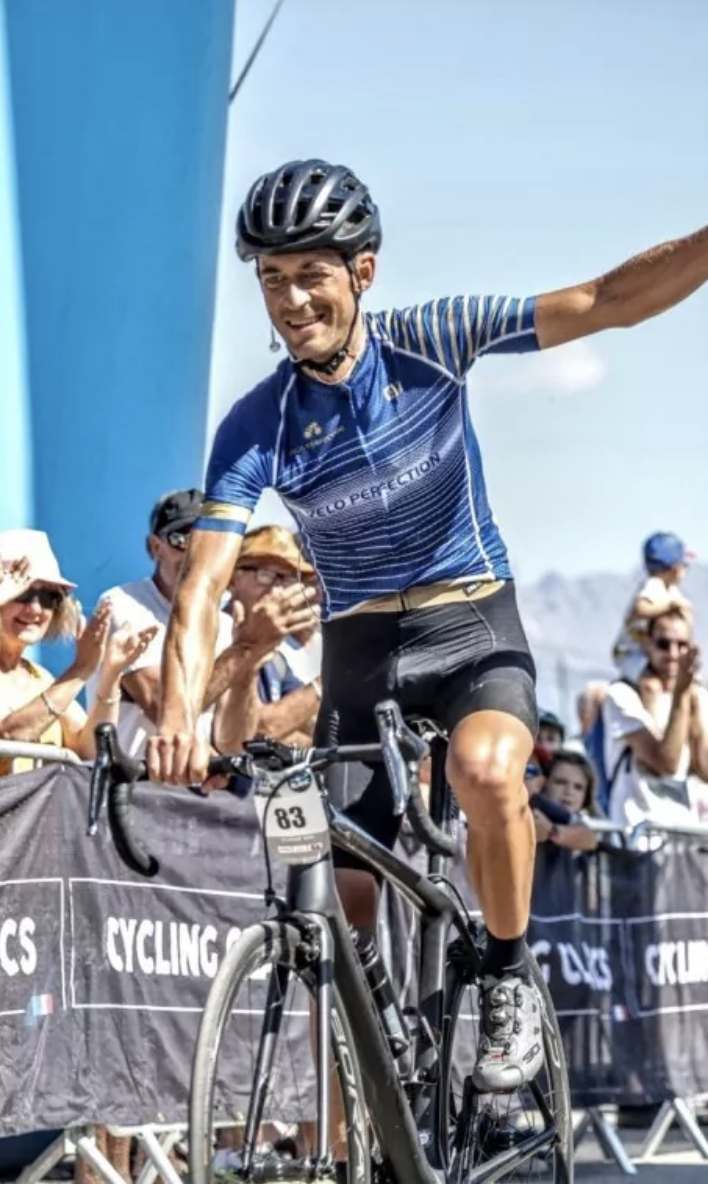
Five years with the pros!
When did you start cycling?
I started around the age of 10. Then I went through all the youth categories: cadet, junior. At 17, I was in a sport-study program with special timetables, which enabled me to make serious progress. Moving up to "Espoir", I was lucky enough to join an "amateur" team in Italy for four years.
The calendar and structures there were already very professional, much more so than in Switzerland at the time. At the same time, I also pursued university studies in Switzerland (a master's degree in social sciences at Lausanne University).
Then you went "pro"?
I didn't have the level to join a big team, but I nevertheless found a pro contract. I raced for five years in a professional team, the equivalent of a third continental division. First three years with a Swiss team, then a year with a team based in Hong Kong (Asia's leading professional team), and finally a final season with Austrian outfit Team Voralberg.
When did you stop your career?
As I approached thirty, after two or three complicated seasons, mainly due to injuries, I put an end to pure competition. But I stayed in the world of cycling: I set up my own company providing services for cyclists (postural analysis, coaching, accompaniment) and continued to ride, but with a focus on long-distance, discovery, adventure...
Without even a following car!
Why did you choose the Route des Grandes Alpes®?
I'd had this crossing in mind for a while. The route is incredible! Starting from Lake Geneva to the Mediterranean, through magnificent massifs, mythical passes... I liked the concept: start "from home", go all the way to the sea, cross the Alps. I knew most of the route, with the exception of the col de la Couillole, having done it in sections.
Which route did you choose?
I opted for the "classic" traverse route. I had read Thibaut Clément's interview and set myself a timing close to his. More as a personal stimulus than an obligation. I set off in complete autonomy, in bikepacking mode, without even a following car for photos, and that helped me stay focused in the more difficult moments.
You chose the first Sunday in September to set off?
I opted for the "classic" route of the crossing. I had read Thibaut Clément's interview and set myself a timing close to his. More as a personal stimulus than an obligation. I set off in complete autonomy, in bikepacking mode, without even a following car for photos, and that helped me stay focused in the more difficult moments.
How did the departure go?
I decided relatively late, depending on the weather, because I wanted to take advantage of good conditions. The day before my departure, I cycled to Thonon-les-Bains from home. I spent the night there, before setting off at 6:00 am on Sunday September 7. On Sunday evening, I took a break of about 5 hours in Valloire, then I set off again in the direction ofNice where I arrived on Monday evening at around 7:30pm. On Tuesday morning, I took the train back to Geneva.
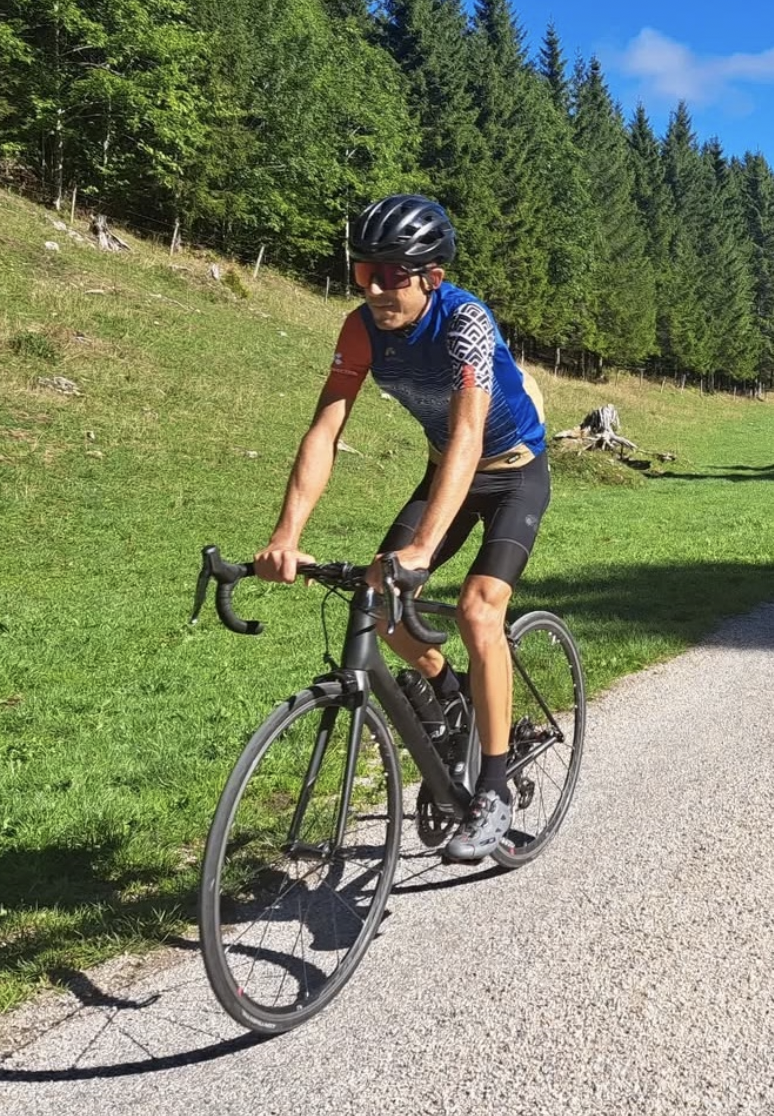
Experience and fitness
How did you prepare?
My preparation wasn't specific. It was part of what I've been doing for several years: lots of kilometers, long distances.... This summer, I had already taken part in a bikepacking race: the Swiss-Bike-Adventure, around 1,300 km and 23,000 m of ascent, in complete autonomy. This enabled me to arrive physically ready for the Route des Grandes Alpes, about a month later. So yes, I was well prepared, but I didn't have an ultra-specific program. I relied on my experience and my good physical condition. As I told you, the final choice of date was made at the last minute after weather evaluation.
Tell us about your equipment
I was on a Specialized Tarmac SL8, with Hyperon wheels and a Shimano groupset. I had deliberately lightened the equipment, as I had no logistical assistance. Just a small pannier under the saddle. Usually, for longer trips, I use a rigid luggage rack, but for this project, I chose to carry very little. In terms of clothing, I had a pair of cycling shorts, a long-sleeved jersey, a good chasuble, a windproof waterproof jacket, gloves and a hat for the night. I knew that the hardest part would be the ascent of the Col du Galibier pass, in the coldest hours of the night. As my "on-board computer", I had a Garmin Edge 840...
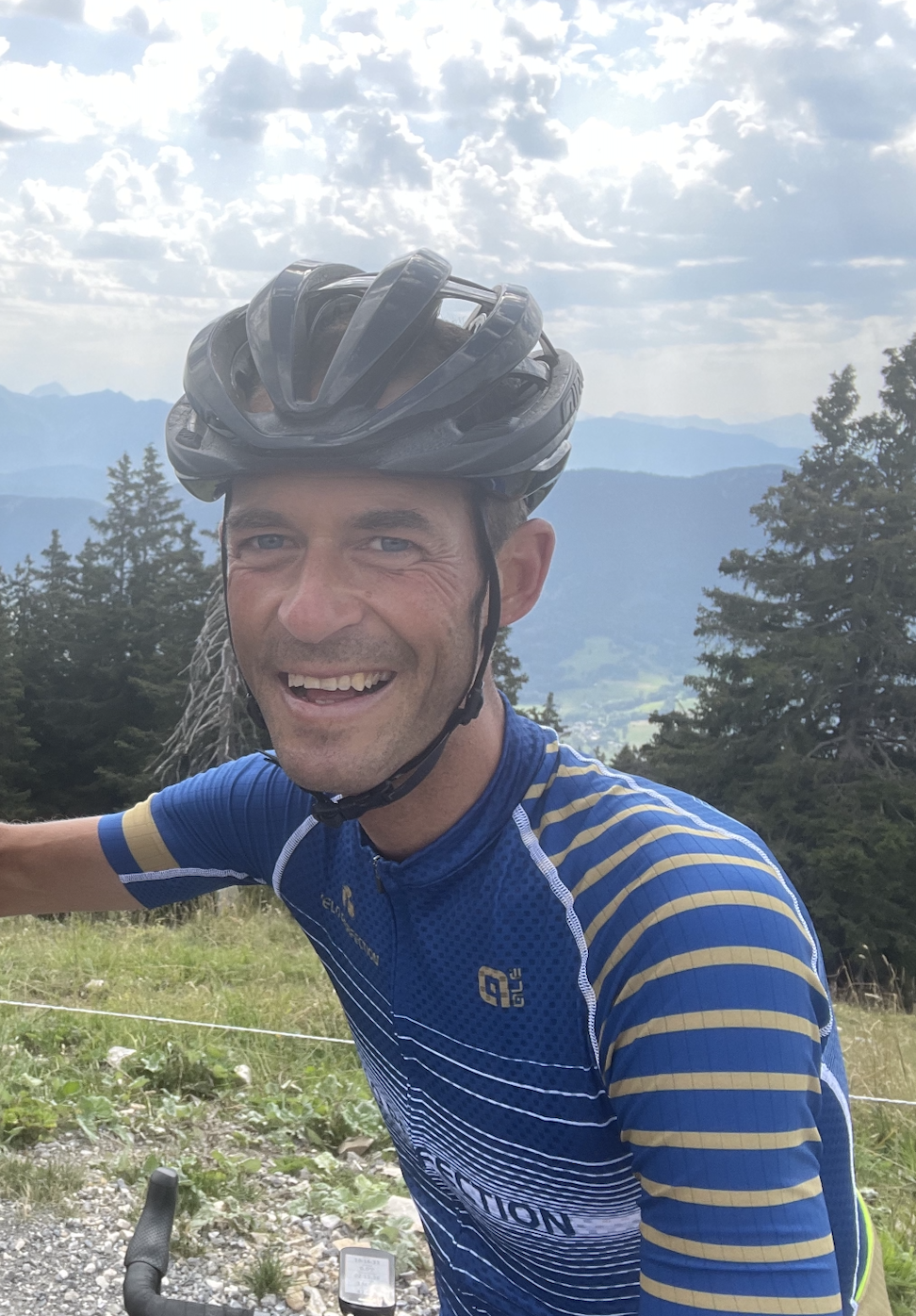
How much did the loaded bike weigh?
The bike is about 6.2, 6.3 kg empty. I carried about 3 kg more of equipment and supplies plus two 750 ml cans. So just over 10 kgs all in all.
I don't like riding at night!
What strategy for the night?
My strategy was to avoid riding at night as much as possible. So I set off at 06:00 from Thonon les Bains to arrive in Valloire before 21:00 on the first day. I booked a small hotel for dinner and a few hours' sleep before setting off again at around 03:00 to make the most of the day that dawned on the Col d'Izoard. The only real 100% night section was the ascent of the Galibierr and the descent to Briançon via the Lautaret. I arrived in Nice at dusk. I don't like riding at night, so I kept the night part to a minimum and maximized recovery.
Equipment problems?
No punctures, no major mechanical problems. Just one small incident: the attachment for my front lamp came loose on the Galibier climb. Luckily, I had a roll of tape!
Weather conditions?
I was very lucky with the weather! At the start, I was a little cold between the Col du Feu and Morzine, a really uncomfortable moment. Then the sun came out for the whole of the first day. At Galibier, I had anticipated the cold, but the road was dry, which made the ascent and descent to Briançon much easier. The second day, as far as Vars, it was cloudy, but then the skies cleared and by the time we reached the Côte d'Azur it was really beautiful.
Hundred grams of carbohydrate per hour
What kind of breakfast before setting off?
Based on special effort powder, mixed with vegetable milk (soya or almond). It makes a sort of easily digestible caloric puree. I added a protein pudding. I'm used to this type of breakfast before a big effort.
Next, how did you manage your diet and hydration?
I aim for around 100g of carbohydrates per hour on this type of effort. Right from the start, I had planned Winforce energy drink in two cans and took along two extra sachets. I consumed Maurten gels (I like this brand), 45 g of carbohydrates per gel, two gels per hour = 90 g or so. I had about ten in reserve, as well as sweet and savoury bars to spoil the taste.
For completeness, did you refuel en route?
For refreshments, I had scouted out in advance the gas stations or mini-markets open on the route. I bought "quick" staples: a baguette + sliced ham or chicken to make sandwiches. I found some bananas at the end. After a while, the body suffers and it's important to eat only what you feel like. I also took Coca Cola or "sports" drinks when possible.
I was aiming for 26 km / h average
Did you drink coffee?
No! I avoid during this type of long effort, especially for digestive reasons. Coffee can have a slightly irritating impact on the stomach, especially when it's already well strained by exertion, gels and energy drinks.
How many calories did you burn?
I think I spent around 12,000 kcal on the whole, maybe more... I'm not sure of the exact figure. The body accepts a small deficit over 24 36 hours.
What was your average speed over the whole route?
I had calculated in advance a target speed to be able to reach Nice in two days, with a planned stop in Valloire to sleep for about 4 to 5 hours. Taking into account pure riding time, refueling stops, and the break in Valloire, I was aiming for an overall average of 26 km/h. On the first part, up to Valloire, I was slightly ahead of plan: around 28 to 28.5 km/h average rolling speed, which gave me a slight lead. On the second day, between Valloire and Nice, this lead enabled me to manage my efforts and rest periods well. My average speed was therefore a little lower, around 24 to 25 km/h. In the end, I managed to maintain an overall average in line with my initial plan, which enabled me to arrive in Nice just before dark, as planned.
I never thought of giving up
What were the best or most beautiful moments?
The climb up Joux Plane, early in the morning, with the view of Mont Blanc. The part of the Iseran in the high mountains, in beautiful late-day light. Arriving at the edge of the Mediterranean, with the feeling that the goal has been reached...
And the tough ones?
Just after the climb up the col du Feu to Morzine, because of the cold and damp. The monotonous part of the Iseran to Val d'Isère, where I was mentally exhausted. The descent to Briançon in the middle of the night with roadworks. The col de Turini i, with all those twists and turns was long and a bit wearing, when tiredness set in. But I never thought about giving up. Everything was working well and I wanted to finish within the timing I'd set myself.
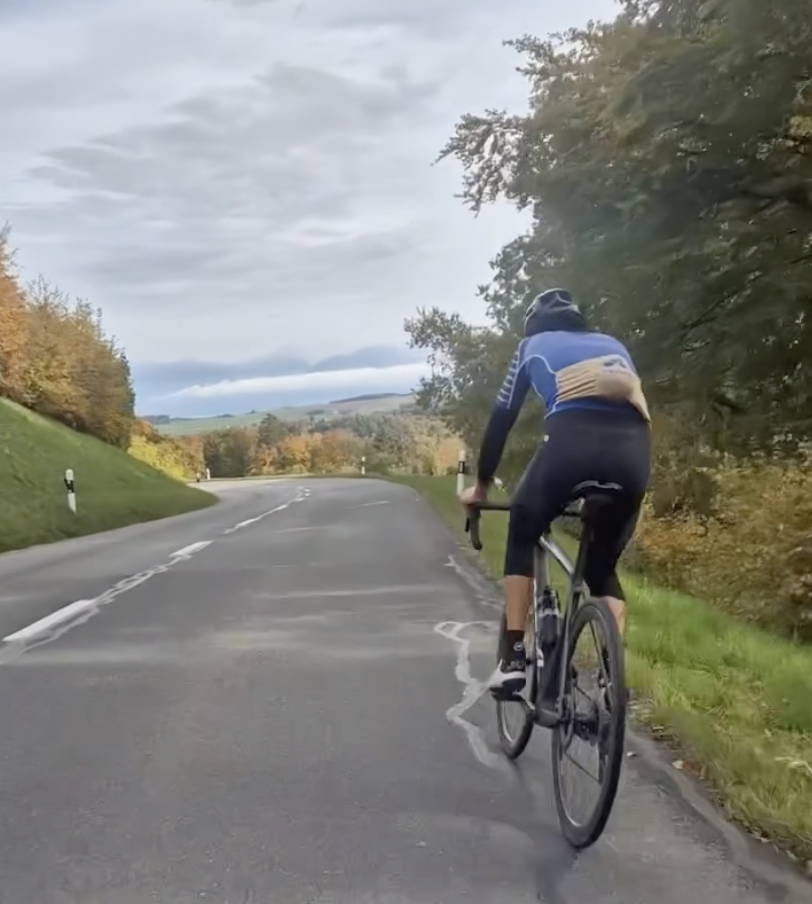
Did you fantasize a little about the Col de Castillon?
Yes, I approached it with a little apprehension. After the Col de Turini, which had given me a good mental start, I was unfamiliar with it and didn't really know what to expect. At the time, in my advanced state of fatigue, everything seemed longer than it really was. In fact, it's a small, rolling pass at around 700 m altitude, just after Sospel. Once we tipped over at the top, the view of the sea quickly gave me a big boost to finish on a high.
This route is incredible!
What did you do after the finish?
On arrival in Nice, I had dinner in a good restaurant. Then after a night in a hotel, the next morning I took the train home. Mentally, it took me a day or two to get completely out of my adventure bubble, full of images and memories. Physically, I recovered fairly quickly: no injuries, joint or muscle problems. Of course, I didn't ride "flat out" the following week. It took me about 7 to 10 days to get back to riding harder.
If I had to do it again?
I wouldn't change much: everything went as I had somewhat planned. The experience was very good. What I would do differently: maybe go again with other people, or on a variant. I like the "Lake Geneva to Mediterranean" concept so much that I'd like to discover other routes.
A new challenge for 2026?
I have several projects in mind. A bike packing event in early March in southern Morocco: around 1,800 km in the Anti Atlas. The Race Across France or "Such" in Switzerland. The idea is to cross the 23 cantons freely, but passing through checkpoints. In any case, in 2026 I'll keep the long-distance/adventure orientation.
A message for those who would like to attempt the same crossing as you?
Give it a go! This route is incredible. You can tackle it any way you like: in one go, or over several days, in adventure or sport mode. The important thing is to live it according to your desires and enjoy the itinerary 100%. Of course, check the weather, anticipate refuelling a little, but above all: ENJOY IT!