
Route des Grandes Alpes® Gravel: Tom and Valentin's challenge
They-they crossed the Alps and they-they tell...
Valentin, 28, is in charge of a climbing gym in La Rochelle. Tom, 30, looks after a refuge near Briançon. Their friendship goes back over ten years, forged through projects, travels... and above all, an unexpected ordeal: in 2024, Tom faced Burkitt's lymphoma. Hospitalization, treatment, then a severe infection that threatened his leg for a time. In remission, he is physically and mentally reborn, and returns to sport with renewed energy.
This momentum gave rise to the project of crossing the Alps together on a Gravel bike. In early October 2025, as the mountains emptied of their last tourists and blazed with autumn colors, the two friends set off on the mythical Route des Grandes Alpes® Gravel.
A sporting challenge but also a committed act, carrying a message of hope and resilience. For 9 days, they pedal for life, for the beauty of the summits, and for those affected by cancer. Valentin looks back on this total adventure, between portages, bivouacs, unforgettable encounters... and surpassing oneself.
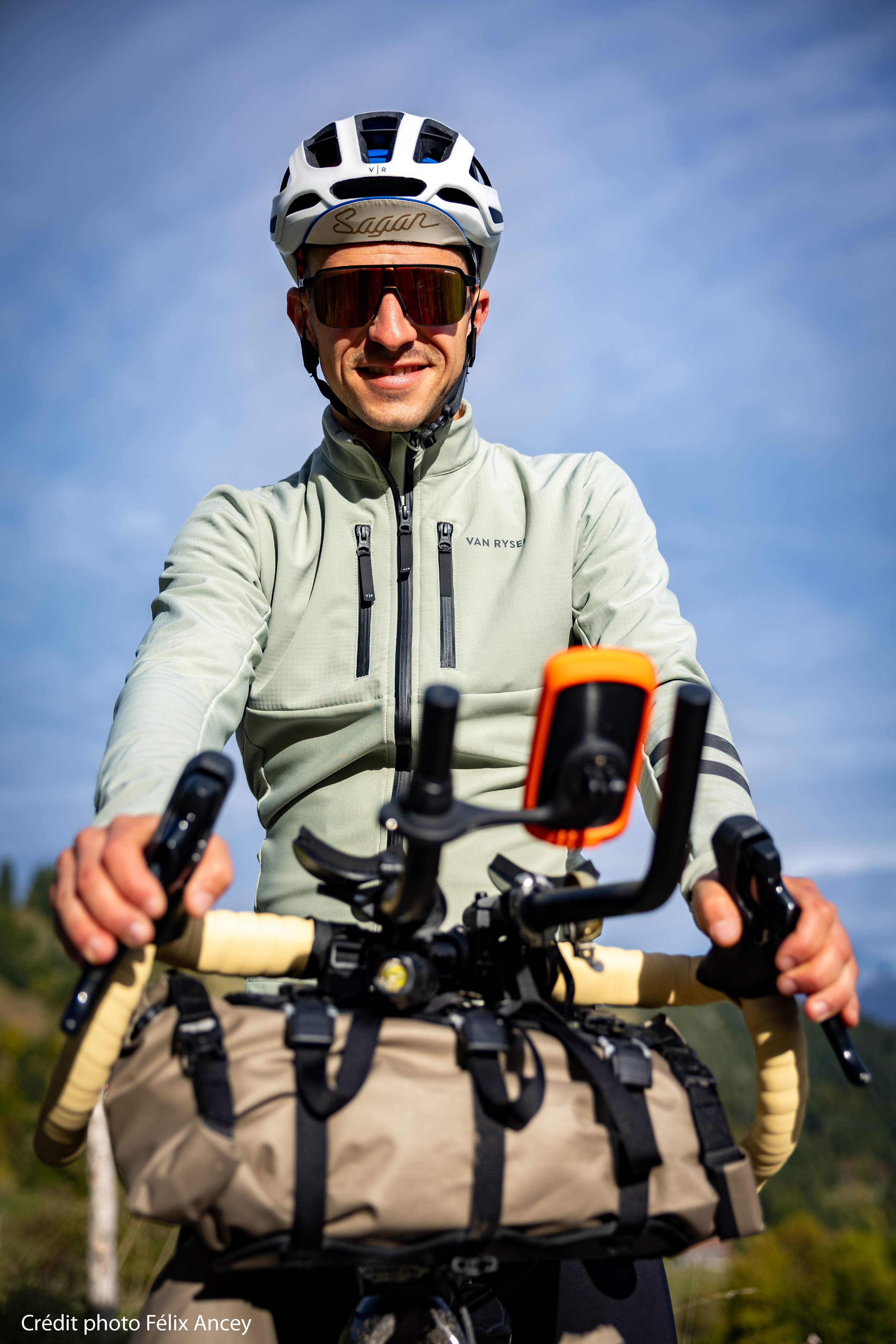
Valentin, could you remind us of the background to your project?
Tom and I have known each other for about ten years. We've shared parties, trips and projects. In February 2024, Tom was diagnosed with Burkitt's lymphoma. It had been a very difficult battle: hospitalizations, heavy treatments, a severe leg infection with the risk of amputation... And then came the almost miraculous remission. This rebirth gave him the desire to live, to take up sport again, to cross new thresholds...
From this was born the desire to cross the Alps from north to south on the Route des Grandes Alpes Gravel?
A shared desire that led us to sign this promise: a great crossing of the Alps by bike, together, to give meaning to our friendship and this recovery. When we got on our bikes, we knew we were setting off on a self-sufficient journey through magnificent scenery. But it was also a project of hope and solidarity in the fight against cancer.
Hope and solidarity
Friends of friends
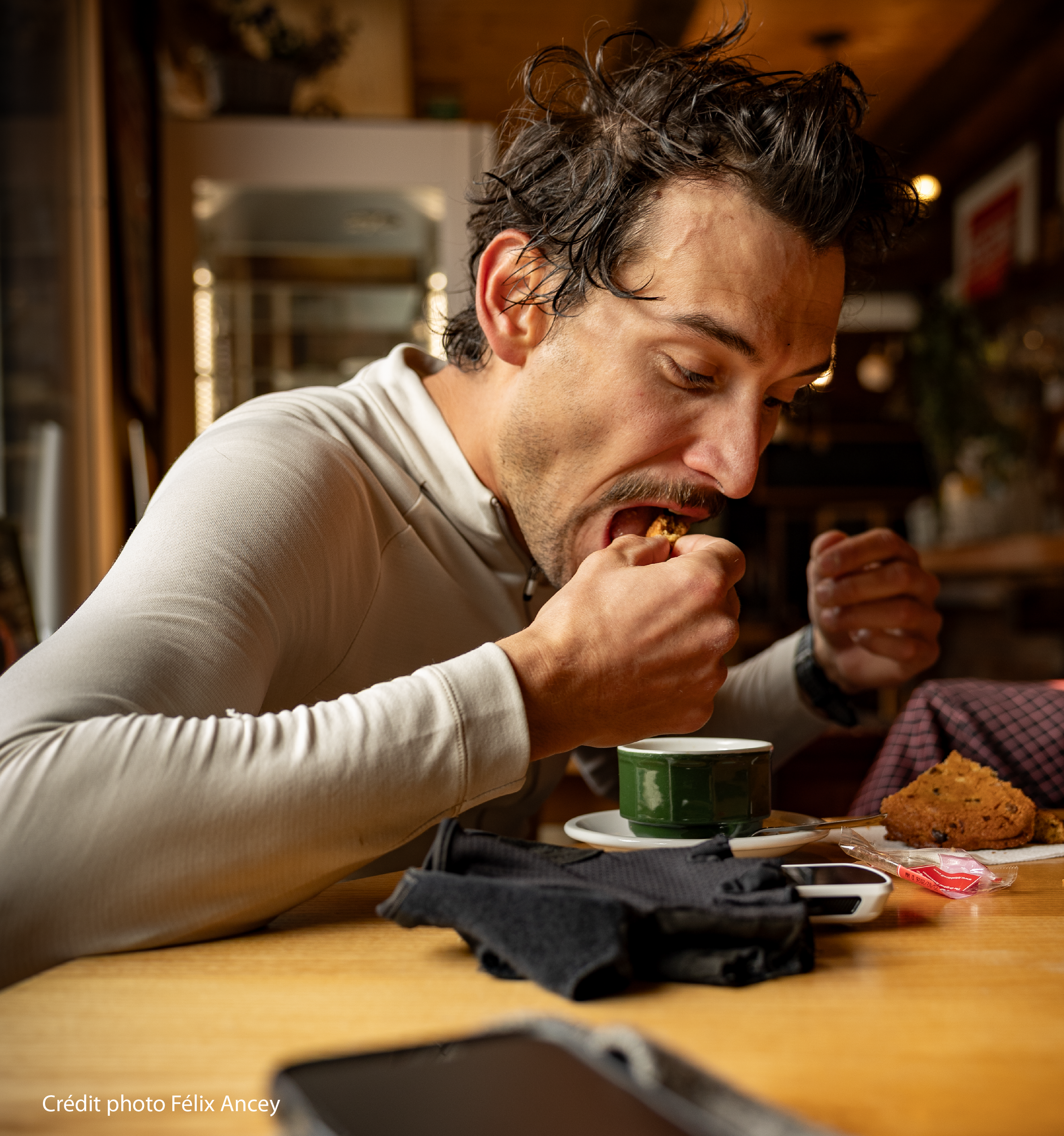
What equipment did you have for roaming?
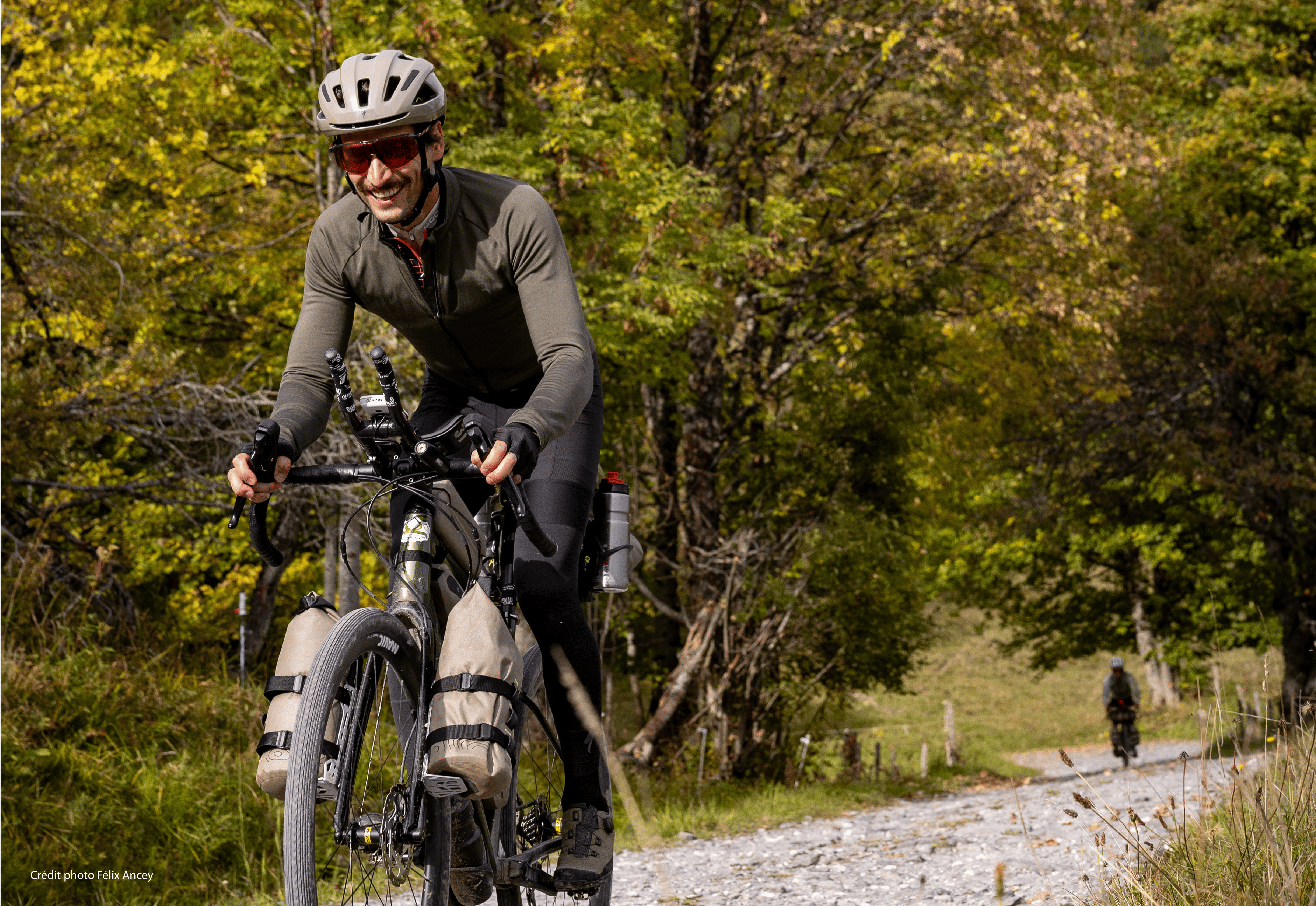
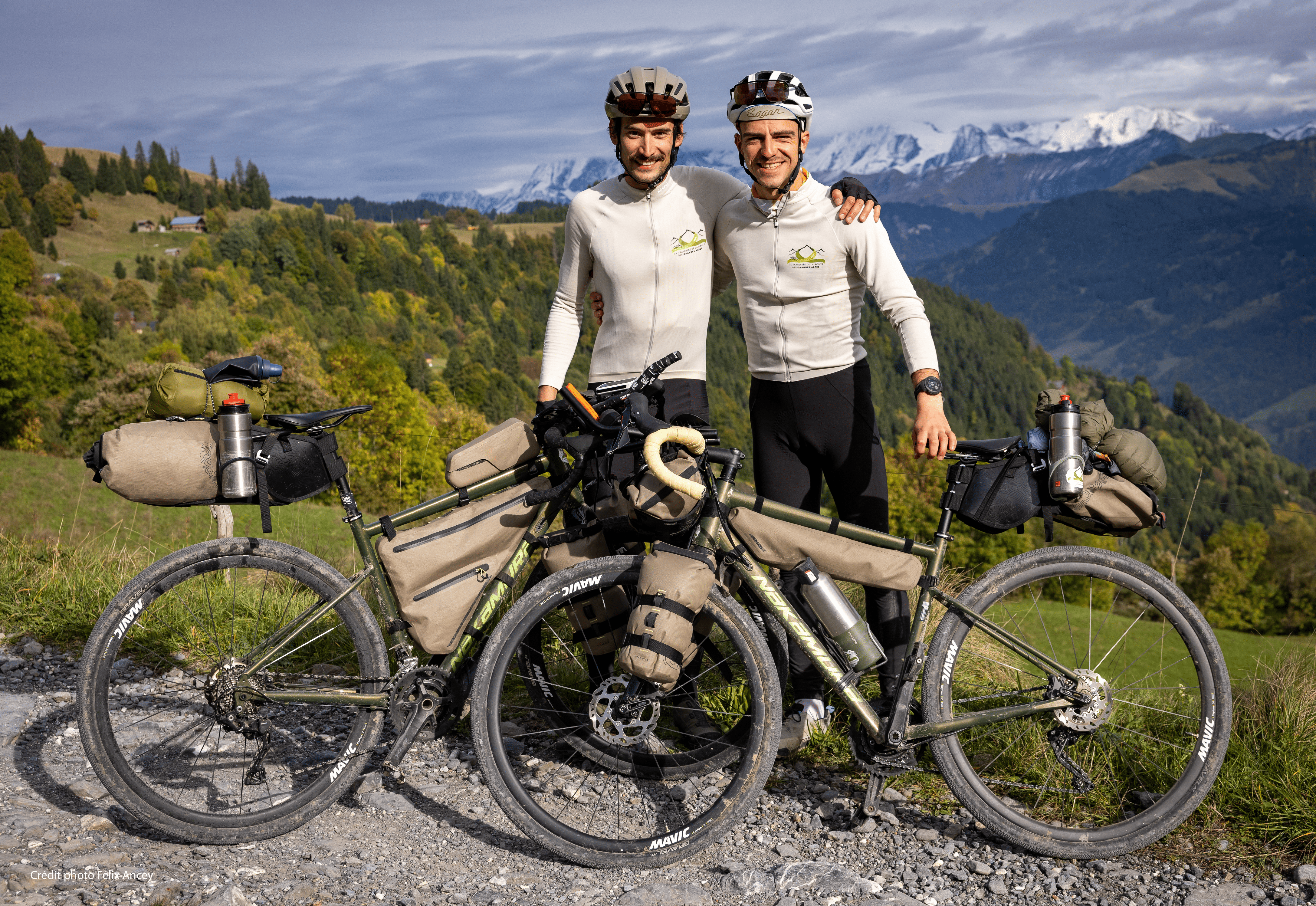
We had all the equipment we needed to bivouac: tent, mattress, comforter. We decided not to take a stove with us: given the weather, the time available and the terrain, we knew we'd use it very little. So we organized ourselves to eat in bakeries, small restaurants or snacks found on the road. For accommodation, we bivouacked about 50% of the time and slept 50% with people we knew little or nothing about, often friends of friends who welcomed us warmly.
Dietary supplements?
We had bought electrolytes before we set off. In the mountains, specialist shops are rare. However, for the rest, we relied on the shelves of local shops to buy cereal bars, "anti-coup de pompe" gels. Our idea was to lighten our load of heavy foodstuffs as much as possible and refuel daily along the route.
What about clothing?
Tom had opted for short shorts + leggings, which allowed him to adjust according to the weather. I'd taken two shorts: one short and one long; in the end, I rode almost all the time in long shorts. On top, we wore a long-sleeved jersey, and we layered on or off depending on the conditions.
At the top of the Iseran, it felt like -15°C
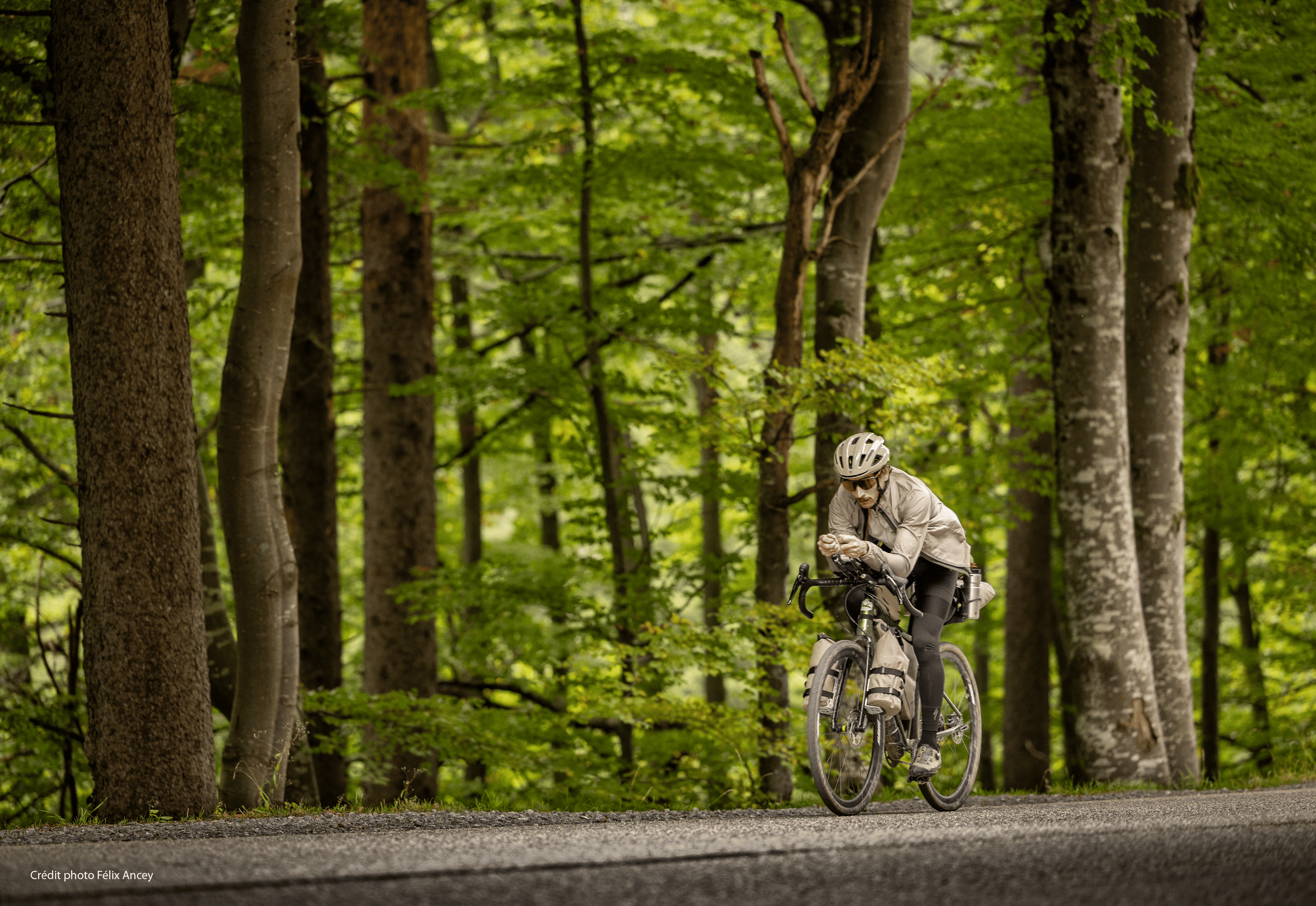
Remember the timetable for the crossing?
We left on October 2, arriving on October 10. It was an autumn window, which implies uncertain weather, potentially harsh conditions, but also softer light. We knew we'd be riding in high, sometimes exposed mountainous areas, and that we'd have to take that into account.
Tell us about the weather and some of the extreme conditions you encountered?
Overall, we were pretty lucky. We had half a day of rain on stage 3. But the real test came on the climb up the Col de l'Iseran, which is officially closed, but which we attempted anyway. From 2,500 m, we drove on snow and ice. The icy conditions were very dangerous. At the summit, the temperature dropped to -15°C. Our extremities (feet, hands) were a bit cold. To improvise some insulation, we slipped dog poo bags into our shoes. This helped a little, but clearly wasn't enough. After that day, the rest of the route took place under milder skies, but that moment under the snow remains etched in our minds.
Did you encounter any mechanical or equipment problems?
All in all, nothing dramatic. We only had one puncture, 20 km from the finish of the last stage. Not bad for Gravel over nine days! By mistake, Tom bled the front brake oil on my bike while trying to adjust a noise. Fortunately, it wasn't in the middle of an uphill descent. Tom's shoes may have been a little light for the cold: that bothered him a little. Otherwise, simple, tried-and-tested equipment, and no major breakages.
Start with a bang
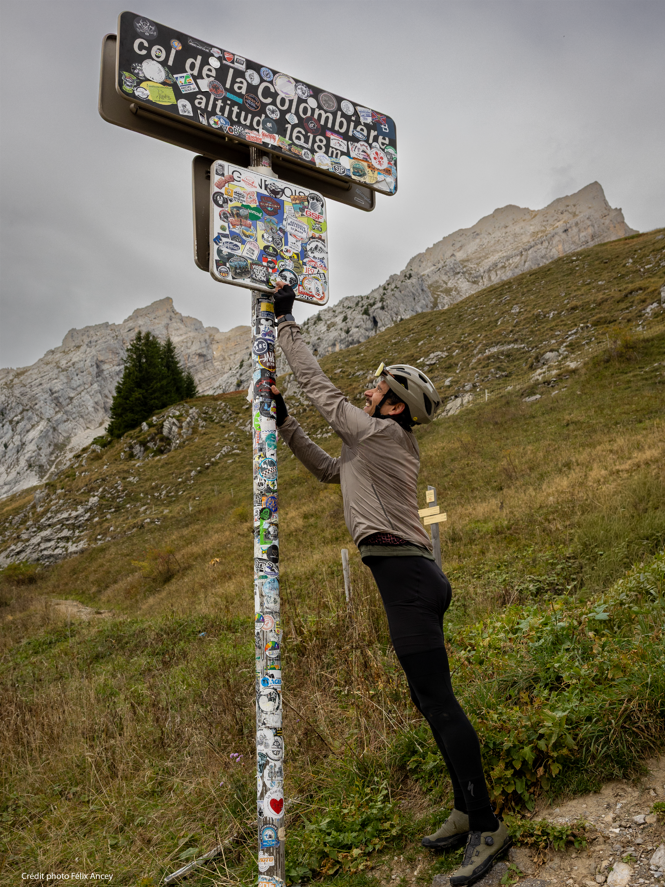
Physically, no fall, no injuries?
No, no fall! As for injuries, Tom had a scare with his knee quite early on, then it recovered on its own. Two days later, I had the same problem. It was probably due to poor bike settings (saddle, position, etc.). We hadn't done a postural study before setting off. In fact, my knee still hurts today. The slightest millimeter of adjustment can make all the difference.
What did you think of the Route des Grandes Alpes® Gravel itinerary?
Magnificent! Mountains, lakes, forests, solitude, it was all there. But some sections are very / too demanding. Gravel sections with climbs of over 20% on unstable terrain... We wondered if some climbed them without assistance. We think that with a few short, more rolling detours, we could save energy without sacrificing the beauty of the route. A 12% slope on a good road is fine. A 10% gradient on very bad terrain is a real blocker. It makes preparation difficult, especially as, on maps or apps, you don't really realize the nature of the terrain.
Tell us about the start?
We set off from Thonon-les-Bains. The day before, we'd reached Geneva by train and then continued by bike. We met and joined a group of "runners" who were organizing a pink walk against cancer. They welcomed us like stars and put us up for the evening. The actual start was on October 02 at around 8am. On the first day, we rode for 7 hours 30 minutes, covering 3,100 m of ascent and descent. We had a very steep climb right from the start, then another before arriving at Saint-Sigismond where we bivouacked. We had to push, but overall we felt good right away throughout that first day.
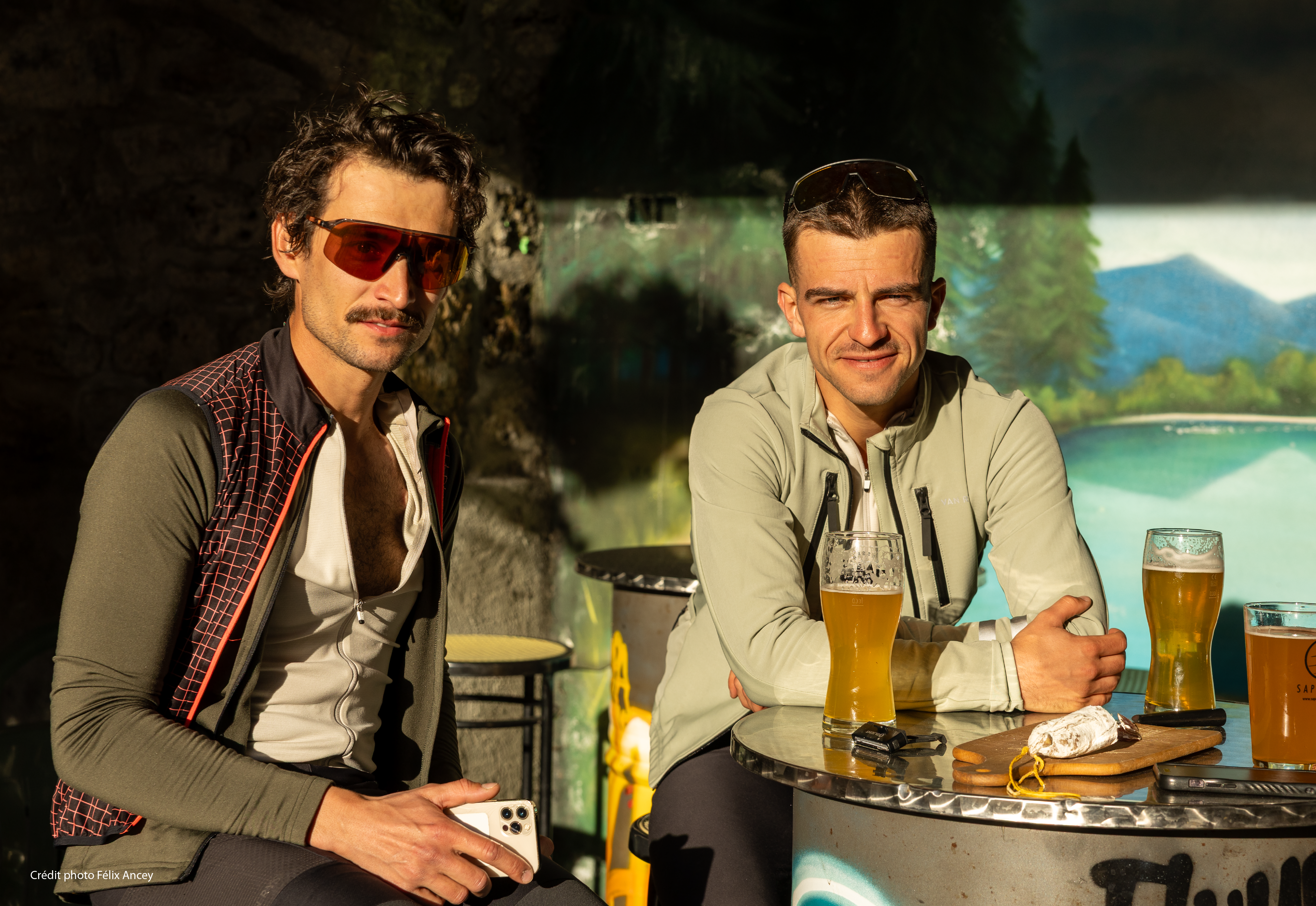
Enjoying the beer at the end of the day
What about the next day?
After a tough first leg, we wanted to enjoy the day and the late beer a little more, so we left a little early. We'd also planned to meet up with a photographer buddy, who came along on this leg, which altered our plans a little. As a result, we shortened the initial route: we avoided a mountain pass, which saved us a little time and energy. We covered around 70 km and climbed 2,100 metres. The sky was overcast, but it didn't rain. At the end of the day, we found a little spot to bivouac in Flumet (Savoie), just below the village.
On the third day, you enter the Beaufortain?
Yes, exactly. This is a change of scenery. It's one of the most memorable stages for me. We set off early, and quickly entered a much more mineral, wilder world. We went over the Cormet d'Arêches, which is a really beautiful pass, quite isolated.
A big day, isn't it?
Yes, 80 kilometers and nearly 3,000 meters of ascent. And a lot of Gravel, some of it quite steep. It was a long day, especially as it rained in the afternoon. We arrived in Bourg-Saint-Maurice quite wet. Fortunately, we were put up by acquaintances of friends. People we didn't know, but who opened their doors to us, allowed us to dry off, eat hot food and recharge our physical and mental batteries a little.
Trash bags in our shoes
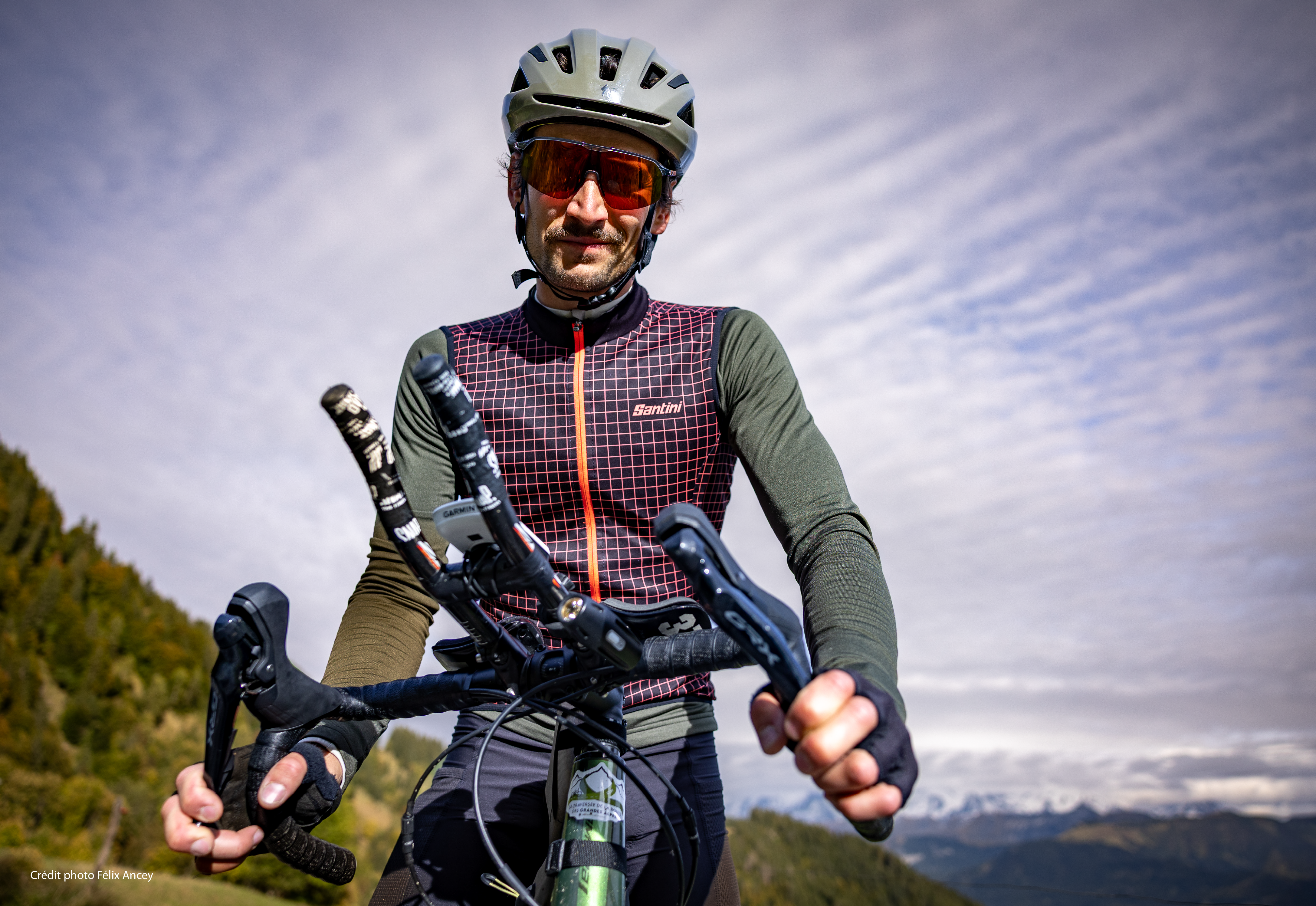
Day four was the Col de l'Iseran... officially closed?
Yes. And that was epic. We knew it was closed, but we decided to give it a go. We went up to Val d'Isère hoping to find a café open to warm up... but everything was closed, on Sunday no less.
And then you went for it anyway?
Yes. The sky was clear, it was sunny. We said to ourselves, "Come on, it's now or never." From an altitude of 2,500 m, we started riding on snow. Then, as we got higher, it turned to ice. We were cautious, we knew it was borderline. But we kept going. At the top (2764 m), it was bitterly cold, feeling like -15°C because of the wind. Our feet were super cold, despite the garbage bags in our shoes.
And the descent?
On the south side, it was worse than we'd imagined. We thought the snow would have melted, but no: there was ice up to 2,400 / 2,300 meters. We spent a good part of the descent on foot, beside the bike, hands clutching the brakes.
Where did you sleep that night?
In Aussois. Once again, at the home of people who had invited us. Frankly, it was a relief. It was the only day we did a big pass and hardly anything else, but it was more than enough.
We knew there would be portage!
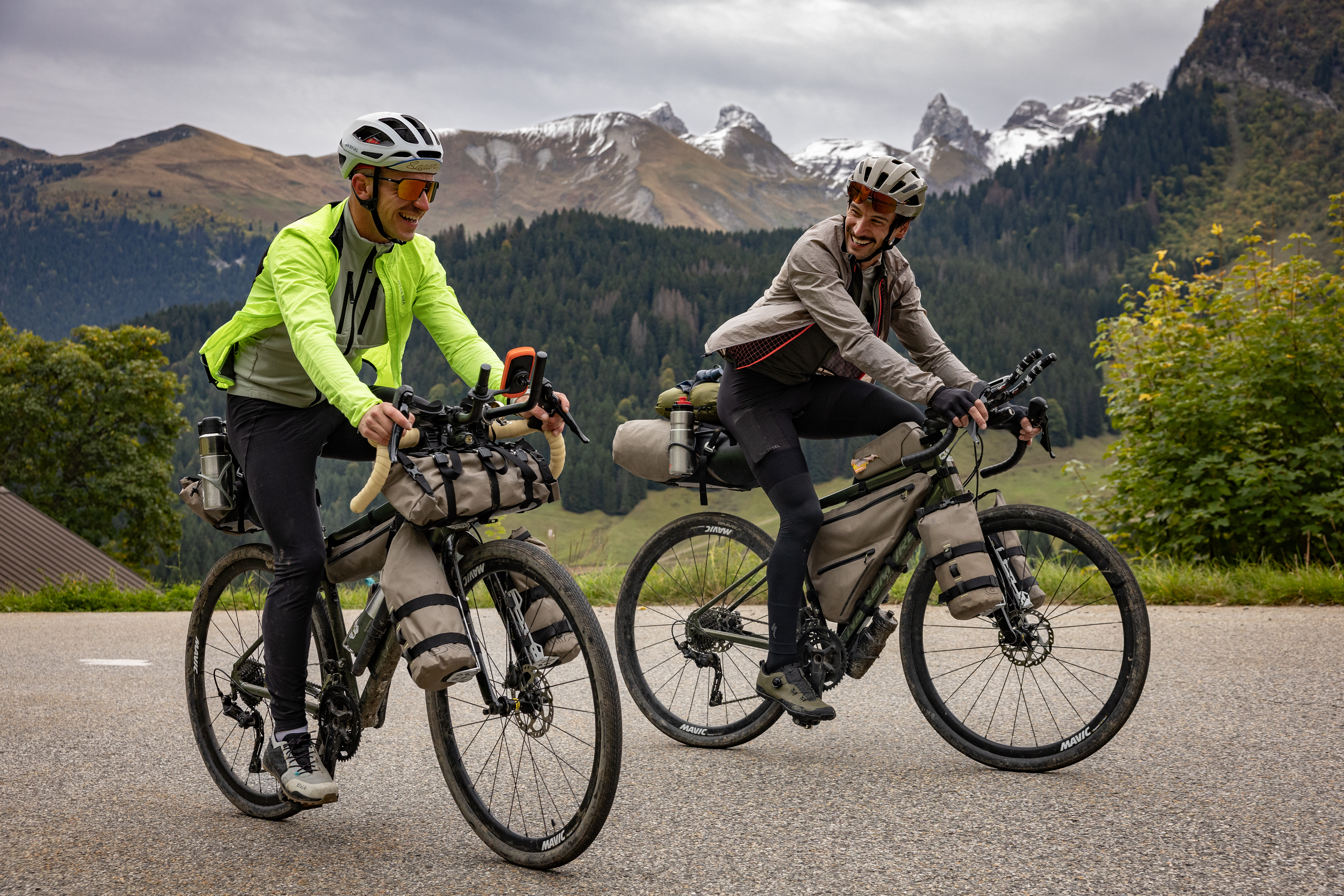
On the fifth day, you'll go as far as Briançon, in the Hautes-Alpes?
We start from Aussois, down to Saint Michel de Maurienne, we climb the Col du Telegraphe and cross Valloire. At the bottom of the valley, we abandon the road to the col du Galibier and set course for the Névache valley, through the Cerces massif.
A committed passage?
Out of the norm, even! We knew there would be some portage: 30 to 40 minutes with the bike at arm's length! It was physically tough, but we knew that and we'd prepared ourselves psychologically.
What did you think of this section?
It's one of the most beautiful stretches of the whole route! Remains of military fortifications at Camp des Rochilles, high altitude lakes, ridges, suspended valleys... The sensation of being completely alone in the world. And when you reach the Clarée valley, it's as peaceful as it is magnificent. Then down to Briançon. Tom lives there, so house, shower, hot meal...
Night under the stars, in the middle of stag bellowing season
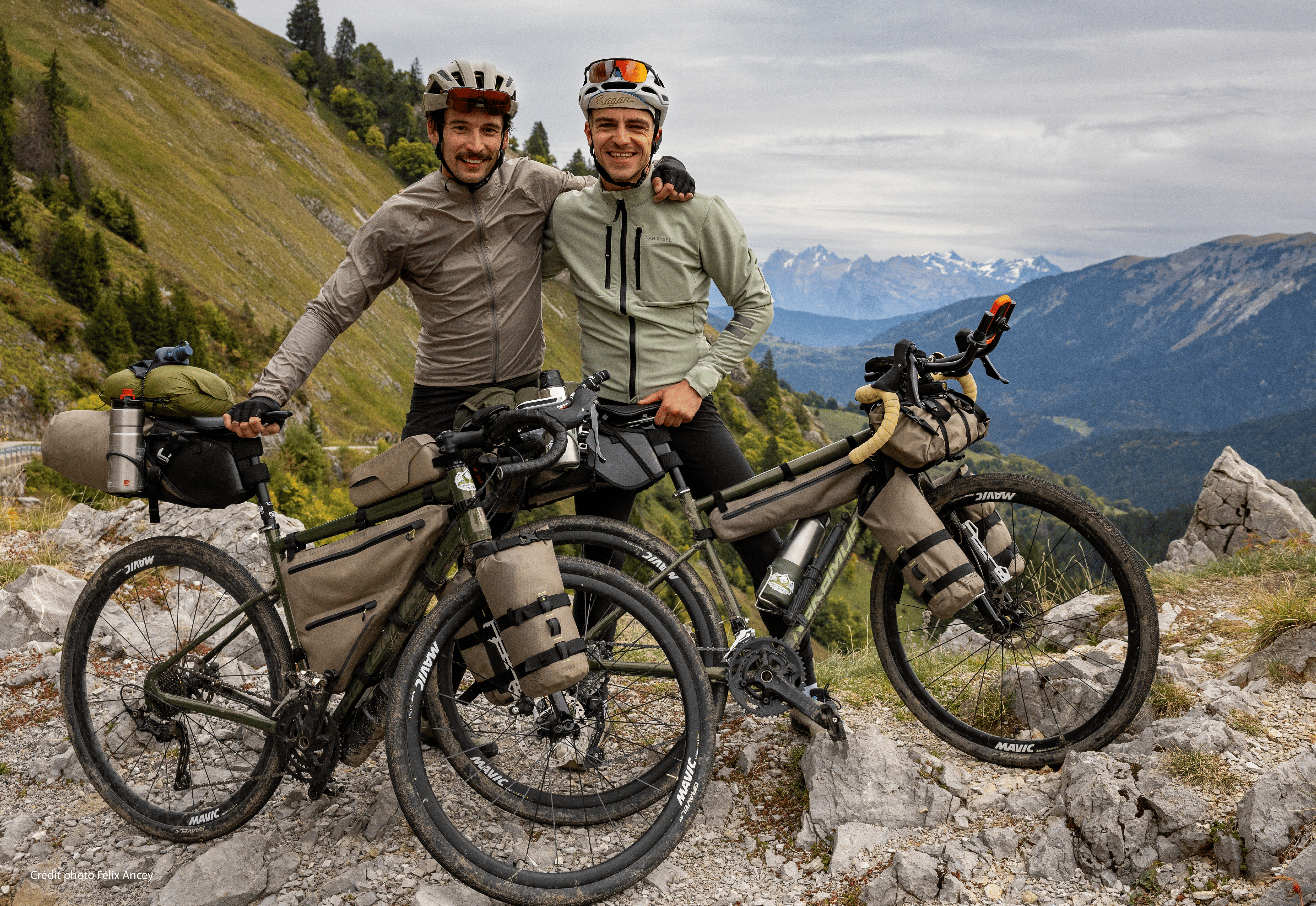
Day six, did you have a good ride?
Yes, we left Briançon, in the Hautes-Alpes to reach Barcelonnette, in the Alpes de Haute-Provence. We crossed the Izoard and the col de Vars, but on asphalt. It was almost relaxing. We averaged 17 km/h, which was quite a change from the 12-13 of the previous days. As for the weather, we could feel that we were arriving in the south. It was milder, brighter.
Day seven: Barcelonnette - Isola 2000 via La Bonnette?
We climbed La Bonnette in Gravel on fairly accessible terrain. The view from the summit is as impressive as ever. Unfortunately the summit was under construction, so we weren't able to do the final loop.
And the bivouac at Isola?
Memorable. We pitched our tent under the stars, in an ultra-wild place, right in the middle of deer bellowing season. We heard them most of the night. It was magical!
The end stage... and hunger
On the eighth day you slept on the Turini?
We left Isola to join the col de Turini. The road signs read "Nice - 30 km". Except that on the Gravel route, we still had 150 km to go. It was a bit of a morale-booster. In the end, we took the road up to Turini. The bivouac up there, still under the bellowing of the stag, was magnificent...
And the last day?
We left the Turini, heading Nice. A mix of gravel and road. Few shops on the road because it was Sunday and everything was closed. It was the stage of the end and of hunger! I also got a flat tire after mismanaging tire pressure. In the end, we arrived around 3pm.
What moments will you particularly remember from this trip?
The Iseran pass on snow and ice is unforgettable, but frankly not to be recommended. The portage in the Cerces, the Clarée valley, sublime. Bivouacs with the sound of stags bellowing. Moments of effort, silence and raw nature. And above all, the human experience: the people who followed us, sheltered us, encouraged us, the support around the cause of the fight against cancer that we carried.
An engraved moment of friendship
Would you say that this challenge was within your grasp?
Yes. Physically, we did very well. We're not pros, not basic cyclists at all, but we're very athletic. Even with modest equipment, it was largely doable over 9 days.
A message for those who'd like to take the plunge?
Everything is possible, you just have to be aware of your abilities, know the dangers you can expose yourself to, and adapt your preparation and adventure to all that. Some do it in 3 days, others in 10, in 20, some only do 2 or 3 stages, with or without assistance, with or without equipment to carry... There are a whole host of possible variations and everyone is capable of organizing their own adventure on their own scale.
Between the two of you, how did it go?
Our relationship grew stronger. Tom impressed me. After what he's been through, to come back and keep this pace... it's beautiful! This trip is truly an engraved moment of friendship.
What are the prospects now?
We've got a few ideas, ideas are flying around in Tom's head, we'll see. Tour de Corse in Gravel, a trip to Morocco, or riding the Alps again, but this time on the road. For my part, I'm continuing with a Tour de France stage project. Always by bike, always Gravel or road. We'll see what the future brings.