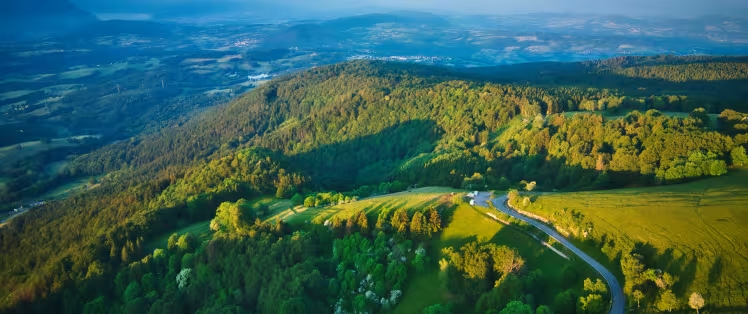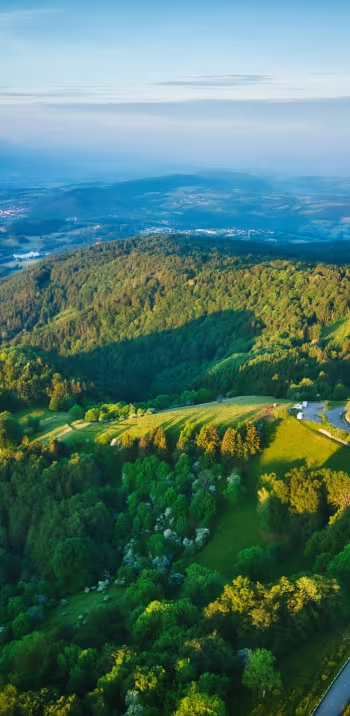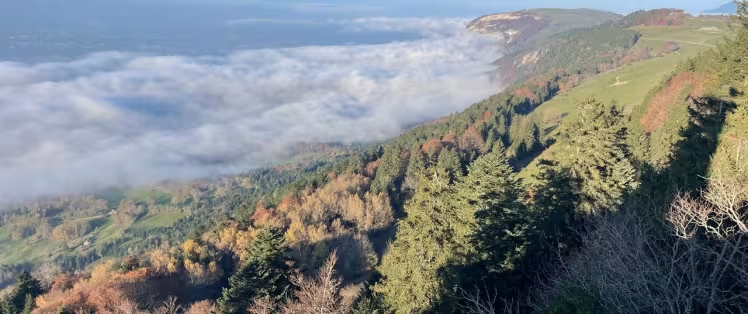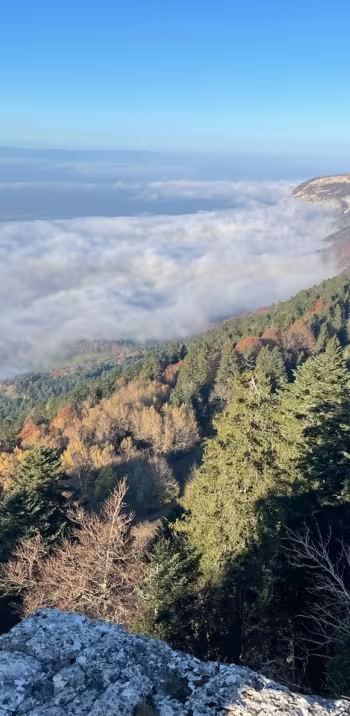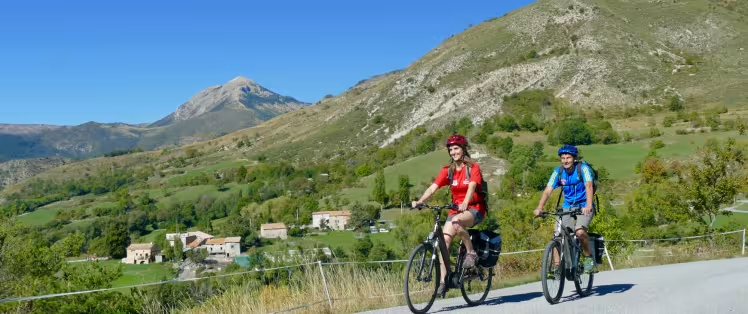


Located just outside Geneva, the Salève Massif has a unique relationship with the Tour de France. Despite its immediate proximity to the Geneva metropolitan area and its reputation as a prime training ground for cyclists in the region, it has been used only on very rare occasions by the Tour de France.
The Tour’s most iconic passage through the Salève typically takes place via the Col de la Croisette, the main gateway to the massif from the Monts du Genevois.
First appearance in 1973
The Tour de France truly discovered the Salève during the 7th stage of the 1973 edition, contested between Divonne-les-Bains and Gaillard. The climb was then classified as a first-category climb. The Spaniard Luis Ocaña crossed the summit in the lead.
At that time, the organizers were seeking to diversify the challenges presented to the riders by including climbs that were less well-known than the traditional major Alpine passes but were reputed to be demanding.
Confirmation in 1974
The mountain range appeared on the route again the following year during the Besançon-Gaillard stage. This time, it was the Spaniard Gonzalo Aja who crossed the summit in the lead.
These two consecutive appearances helped raise the Salève’s profile among Tour de France fans and cycling enthusiasts.
Return in 1981
The Tour returned to the region during the stage connecting Thonon-les-Bains to Morzine. At that time, the Salève was classified as a Category 2 climb. Belgian rider Hendrik Devos crossed the summit in the lead.
This appearance illustrates the changing role of the mountain range in the route: it was increasingly viewed as a transitional challenge before the major Alpine passes rather than as a major obstacle of the stage.
1992, the last appearance of the 20th century
The Salève reappeared during the Dole–Saint-Gervais Mont-Blanc stage. Reclassified as a first-category climb, it saw French rider Fabrice Philipot cross the summit in the lead.
After this edition, the mountain range disappeared from the Tour de France route.
Why is the Salève so rarely included in the route?
Several factors may explain its limited presence in the history of the Tour de France:
· its relatively remote location compared to the major Alpine mountain ranges;
· roads that are sometimes narrow by today’s Tour logistical standards;
· competition from the major passes in Savoie and Haute-Savoie, which are often considered more spectacular and more appealing to the media.
Despite this, the Salève retains an important place in the region’s cycling culture. Its proximity to Geneva and its steep slopes have long made it a premier training ground for climbers and cycling enthusiasts.
A Return Scheduled for 2026
After more than thirty years of absence, the Tour de France is set to return to the Salève during the 15th stage of the 2026 edition, between Champagnole and the Plateau de Solaison. The route includes a climb up the Col de la Croisette.
This will be the fifth official passage of the Tour de France through the Salève massif since its inception.