


From Lake Geneva to the great mountain passes of Valais, French-speaking Switzerland is a cyclist’s paradise. People come here for the scenery, the mountain roads and the villages. They also discover a language – French – which is part of everyday encounters and little adventures. For those who decide to extend their stay, work or settle in the region, learning to speak it quickly becomes a necessity.
By bike, the Swiss Alps also tell their story in French
Climbing the Col de la Croix in the Vaud Alps, cycling to the Great St Bernard Pass from Martigny, riding alongside the Lavaux vineyards or following the Rhône to Lake Geneva: it’s hard to find more varied terrain for cycling.
On these routes, there’s no shortage of opportunities to speak French. Asking if the pass is open, chatting with another cyclist on a café terrace, looking for a good place for lunch or simply exchanging a few words with the locals. Nothing complicated, but these conversations are also part of the journey.
For foreign visitors, they sometimes provide a first taste of the language. And for those who choose to stay in French-speaking Switzerland, they give a glimpse of what to expect in everyday life.
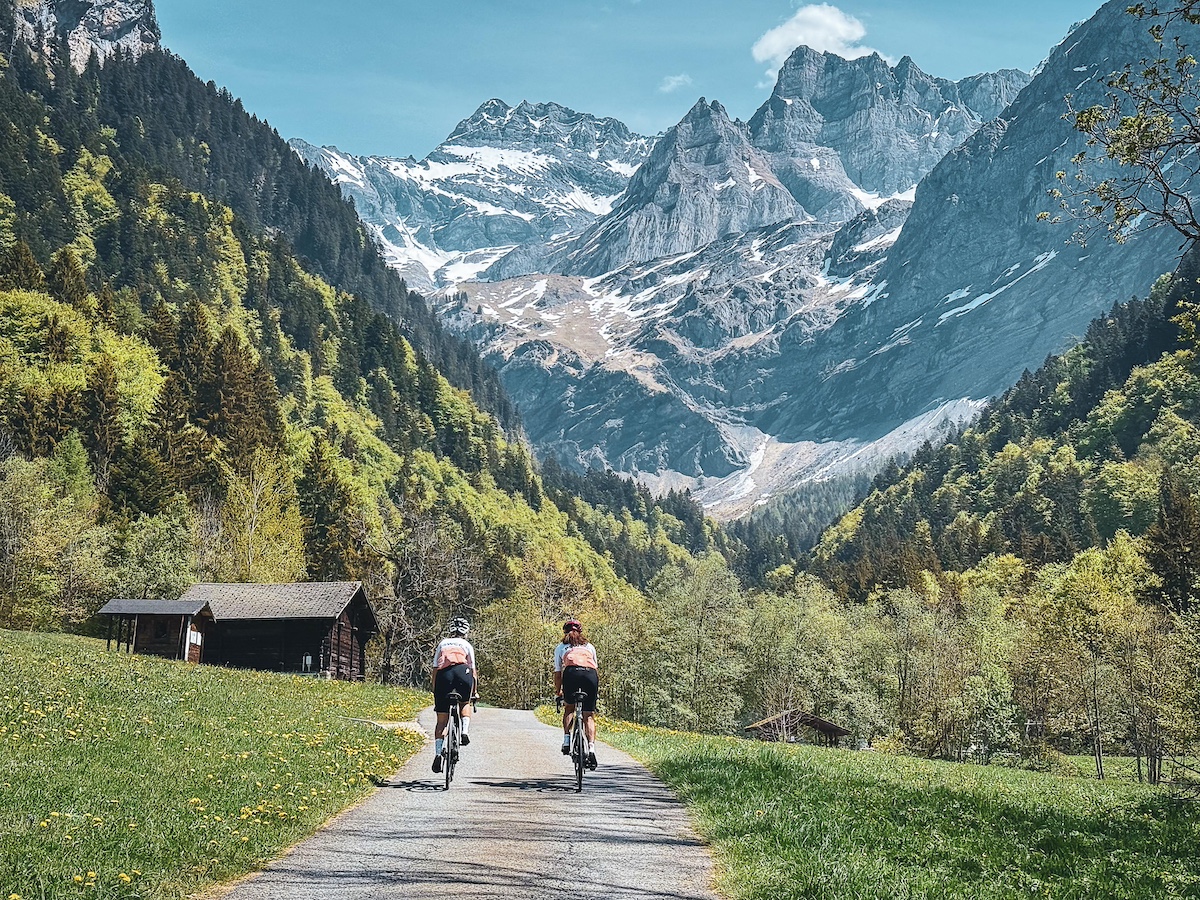
French: much more than just a holiday language
In Geneva, Lausanne, Montreux or in the valleys of Valais, you can often get by with English. But when it comes to work, chatting with neighbours or dealing with administrative matters, speaking French makes a world of difference.
French lessons help you learn the basics and make progress. The rest is learnt on the job, through contact with locals, in shops or within a sports club.
For those considering settling here long-term, the question of language proficiency may also arise in an administrative context. In particular, it is possible to take the FIDE test in Switzerland to have your French language skills assessed.
What is the FIDE test for?
There’s no need to master the subtleties of French literature. The FIDE test primarily assesses your ability to cope in everyday situations: understanding information, holding a conversation, reading a document or writing a message.
It covers levels A1, A2 and B1 of the Common European Framework of Reference for Languages, ranging from the simplest exchanges to more independent communication.
The assessment consists of two parts:
- ‘ ‘Speaking and Understanding’, to assess oral skills through conversations and everyday situations.
- ‘Reading and Writing’, to assess comprehension of everyday documents and the ability to write simple messages.
Results are recorded separately for oral and written skills. They are included in a language passport which can be used for certain procedures relating to residence, settlement or naturalisation in Switzerland. The requirements depend on each individual’s circumstances and the applicable rules.
Learning French: in the classroom and out in the real world
You can know the grammar rules and still be at a loss for words when a shopkeeper asks an unexpected question. Conversely, some people manage to make themselves understood with a limited vocabulary, but struggle to read an administrative letter.
That’s the whole point of learning French on the ground: practical experience immediately complements the lessons. A bike ride with a local group, a chat at the market, a conversation with a neighbour… There’s no shortage of opportunities, provided you dare to give it a go.
French lessons, whether in groups or one-to-one, help you consolidate what you’ve learnt, work on your pronunciation and expand your vocabulary. They also help you build confidence, particularly when you lack opportunities to speak in everyday life.
How can you prepare for the FIDE test?
The first step is to identify your strengths and areas of difficulty. Being comfortable speaking doesn’t necessarily mean you know how to write a message. And understanding a text doesn’t guarantee you’ll be able to follow a spontaneous conversation.
When it comes to preparing for the speaking test, nothing beats practice: asking for information, explaining a situation, recounting an experience or listening to programmes in French. For the written part, it’s best to familiarise yourself with everyday documents and practise writing short messages.
Tailored French lessons can help you develop these skills and understand how the tests are structured. However, they are not compulsory for sitting the fide test, the aim of which is to assess the level actually achieved.
Travelling means exchanging
Sometimes people come to French-speaking Switzerland for a few days’ cycling and return for its landscapes, its villages or its way of life. Some even end up settling there.
In the meantime, one’s relationship with the region changes. You recognise places, settle into a routine, and see familiar faces again. And you appreciate being able to chat without constantly having to search for the right words.
The FIDE test can mark a milestone in this learning process. But speaking French is, above all, about being able to participate fully in local life.
On the roads of the Swiss Alps, as elsewhere, there are the kilometres travelled, the mountain passes crossed and the landscapes admired. And then there are all those unexpected conversations that we sometimes remember more than anything else.